QASED Non-government Research Organization
Note: You can download the PDF format of the report from here.
Introduction
This report studies the situation in Afghanistan in October 2021. In the political arena, however, the caretaker government of the Taliban was not recognized by any country during October, but we witnessed some diplomatic visits, which show the increasing interaction of countries in the region and the world with the Taliban. In the economic sphere, poverty and starvation and rising commodity prices were on the rise, and the Afghan currency was still depreciating against the dollar. Although the international community has pledged humanitarian assistance to Afghans, it has not yet been effective in reducing poverty and improving the economic situation of Afghans due to international sanctions against the Taliban caretaker government. In terms of security, October was bloodier than last month, and this month saw several bloody attacks by ISIS, especially on Shiite mosques. In this report, beside these topics, you would read details and analysis of the important events of this month.
Political Situation
World’s Interaction with the Taliban
About three months have passed since the Taliban took power in Afghanistan, but no country in the region or the world has yet recognized the cartaker government of the Islamic Emirate, however, the interaction of some countries with the new government and the calls of some countries on the international community to interact with the Taliban to prevent humanitarian crisis in Afghanistan has intensified.
The Taliban have also stepped up their efforts to get their government recognized. On October 30, during a press conference, Zabihullah Mujahid, spokesman for the Islamic Emirate, once again called on the United States and the world to recognize their government and warned that if the government was not recognized, it would have dire consequences not only for Afghanistan but also for the world. He said, “Recognition of the new Afghan government is a mutual need. Countries around the world need to recognize us, because if they want security and no threat, they have to recognize us as a responsible country, which will enable us to fulfill our responsibilities to them.”
On October 9, a high-level US delegation met with Taliban representatives in Doha for the first time since the complete withdrawal of US troops from Afghanistan and the seizure of power by the Taliban. The purpose of the meeting, although announced as the safe departure of American citizens from Afghanistan and the release of an American citizen held captive by the Taliban, but it is said that both sides have raised their demands and conditions about the recognition of the new government.
This month (October 12), an extraordinary meeting of the world’s 20 largest economies (G20) on Afghanistan was held. Ahead of the meeting, French President Emmanuel Macron said that world leaders should send a clear message about the conditions for giving international recognition to the Taliban. According to him, these conditions should include equality for women, access to foreign humanitarian missions and non-cooperation with terrorist groups. Therefore, it was expected that the world leaders would send a clear message to the Taliban at this meeting, but in general, this meeting did not lead to a significant conclusion, and the practical steps for addressing the Afghan issue were not discussed.
Zalmay Khalilzad also said a day after his resignation from the US special representative for reconciliation in Afghanistan that Afghanistan is facing “great challenges”. He said in a series of tweets on October 20, “U.S. forces are out, and the war is over for the United States, but this is not the final chapter. The Afghan people face great challenges ahead, including on the economy and security.”
Russia Talks on Afghanistan
An important meeting was held in Moscow on October 20 with the presence of Taliban representatives and representatives of ten countries, including Russia, China, Iran, India and Pakistan. Representatives of the United States were supposed to attend the meeting, but the United States did not attend. Russian Foreign Minister Sergei Lavrov said Moscow regretted the absence of U.S. officials from the international talks on Afghanistan.
Sergei Lavrov welcomed the Taliban’s “effort” to stabilize the situation in Afghanistan, but said the long-term solution is “to form a truly inclusive government that represents the interests of all ethnic and political groups.” According to him, there were many expectations from Ashraf Ghani’s government to achieve tangible results in the peace talks, which were not met.
Meanwhile, Russian Presidential envoy for Afghanistan Zamir Kabulov, said if the Taliban want to be recognized by the world, they must meet international “expectations” about the observance of human rights. Countries attending the Moscow meeting supported the Taliban’s call for a UN-led global conference to prevent economic collapse and humanitarian catastrophe in Afghanistan.
Mullah Abdul Salam Hanafi, the Taliban’s deputy prime minister, who led the Taliban delegation said, “Peace and stability have returned to Afghanistan and national sovereignty has been restored”. But Mullah Hanafi added, “Isolation of Afghanistan is not in anyone’s interest.”
A day after the meeting, Russian President Vladimir Putin said that Russia is pondering over removing the Taliban from the list of extremist groups. Russia included the Taliban in its list of “terrorist groups” in 2003, but Moscow has hosted Taliban representatives several times in the past two years.
Tehran Meeting
The second meeting of the foreign ministers of Afghanistan’s neighboring countries, plus Russia, was held in Tehran on October 27, and its participants agreed that an inclusive political structure with the participation of all ethnic groups is the only way forward to Afghanistan’s issue.
The participating states have issued a joint statement expressing their concern at the complex military-political, socio-economic and humanitarian situation in Afghanistan, and considering that the situation in Afghanistan has changed fundamentally, they emphasized support of Afghanistan’s national sovereignty, political independence, its unity and territorial integrity and non-interference in its internal affairs.
The meeting was attended by the Foreign Ministers of Pakistan, Tajikistan, Uzbekistan and Turkmenistan in person, and the Foreign Ministers of Russia and China in absentia, and the participating countries agreed in a joint statement that the countries responsible for the problems in Afghanistan must live up to their commitments and provide the necessary economic, livelihood and humanitarian assistance to Afghans.
Diplomatic Visits
Diplomatic visits of Taliban officials to countries in the region and officials of regional countries to Afghanistan is part of the global interaction with the Taliban mostly due to the Taliban’s efforts to be recognized by the international community. The Ministry of Foreign Affairs of the Islamic Emirate is working diligently to attract the positive interaction of the world with the new caretaker government.
This month, a delegation of Taliban officials led by Amir Khan Mottaqi, acting head of the Islamic Emirate’s foreign ministry, arrived in Turkey on October 14 after talks with US and EU representatives in Doha, Qatar. Issues related to aid, immigration, air transport and trade were discussed during meetings between the Taliban delegation and Turkish officials. Turkey is one of the NATO members that has kept its embassy in Kabul open after the Taliban took control of Afghanistan and has called on other countries to continue their relations with the Taliban. After talks with the Taliban delegation, Turkish Foreign Minister Mevlut Cavusoglu supported the Taliban’s stance on lifting sanctions against Afghanistan. He said, “We have told the international community about the importance of engaging with the current Taliban administration. In fact, recognition and interaction are two different things.” At the same time, Turkey has said it will only fully cooperate with the Taliban if the Taliban establish an inclusive government. Mr. Mevlut Cavusoglu said he had suggested to the Taliban that they should establish an inclusive government for the unity and solidarity of Afghanistan and provide education and employment for women and girls, not as a precondition from western countries but as an expectation from the Muslim countries. Establishing an inclusive government is one of the reasons why Turkey and other countries have not recognized the Taliban-led government.
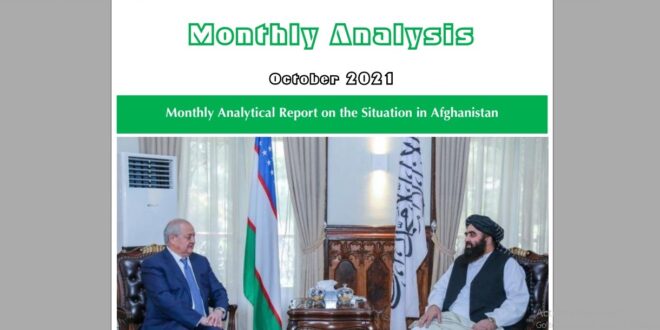
On the other hand, a number of high-ranking officials from some countries also traveled to Kabul to meet with Taliban officials. The Uzbek Foreign Minister arrived in Kabul on October 7 leading a delegation to meet with Taliban officials. After meeting with Uzbek Foreign Minister Abdul Aziz Kamlov, Taliban officials said they had good relations with the country and the good relationship will continue in the future. According to Taliban officials, the two sides discussed major economic projects between Kabul and Tashkent, including the transmission of electricity, railways, and the reconstruction of Mazar-e-Sharif Airport.
Pakistani Foreign Minister Shah Mahmood Qureshi also headed a high-level delegation to Afghanistan on October 21 for the first time since the Taliban took over Kabul. He met with Taliban officials, including Mullah Mohammad Hassan Akhund, the caretaker Prime Minister of Afghanistan. The Pakistani Foreign Ministry said in a statement that the talks focused on bilateral relations and ways to increase cooperation in various fields.
On the other hand, Taliban diplomats have started working at the Afghan embassy in Islamabad and at the Afghan consulates in other Pakistani cities. Pakistani officials have said that although the country does not recognize the Taliban government, it has allowed Taliban diplomats to work in Afghan missions to facilitate consular and visa facilities for Pakistani citizens traveling to Afghanistan for humanitarian assistance.
The Turkmen Foreign Minister also arrived in Kabul on October 30 at the head of a government delegation to meet with Taliban officials and discuss issues related to economy, trade, security and humanitarian aid to Afghanistan. One of the main topics of the visit was the resumption of work on the TAPI project, which plans to transport natural gas from Galkynysh Gas Field, Turkmenistan’s largest natural gas field, through Herat and Kandahar provinces in Afghanistan to Pakistan and India. Following the trip, the Turkmen delegation said it would spend another $5 billion to complete the TAPI project.
Generally, foreign ministers of three countries visited Afghanistan this month. Although such trips show the willingness of countries in the region to engage and cooperate with the Taliban, the overall results of these trips have so far had little effect on resolving the major political and economic challenges facing Afghanistan. It is believed that the Islamic Emirate will face problems until the Taliban show resilience to the demands of the world and recognized by the international community.
Governance and Public Services
This month, however, some steps were taken in governance and service delivery by the Taliban-led government, but overall the governance is still fraught with political and economic problems. Taliban officials, including the caretaker Prime Minister, have not commented on their future governance plans, confusing Afghans.
However, some public services resumed this month. For example, the process of distributing passports, which had stopped after the fall of the previous government, resumed on October 13. Alam Gul Haqqani, head of the passport department, told a news conference that all preparations had been made for the distribution of passports and that up to 6000 passports would be distributed every day.
On the other hand, the new government this month failed to reopen the process of higher education and girls’ schools to female students. Although secondary schools and high schools were opened to girls in some provinces this month, including Kunduz, but in other provinces of Afghanistan, the gates of secondary schools and high schools for girls are still closed.
On October 31, Reporters Without Borders (RSF) said that with the Taliban taking control of Afghanistan, the gains in freedom of expression and media had been completely erased or faced with serious difficulties. Although the Taliban say the media can broadcast freely and in accordance with Islamic values, Reza Moeini, the organization’s head of Afghanistan and Iran, told the media that the safety of journalists is not just personal safety, but also job security and professional security. He said, many journalists have lost their jobs.
Taliban’s Political Opposition
After the fall of the previous government, the majority of prominent politicians and officials of the former government left Afghanistan and did not comment on the issues of the country for the past two months, but in October they had some activities and positions.
Amrullah Saleh, the former vice president, wrote on his Twitter on October 22 that “Pakistan had occupied Afghanistan but the country is too big to be swallowed by Pakistan”. According to him, the country would be liberated once again.
Atta Mohammad Noor, the former governor of Balkh province, and Abdul Rab Rasul Sayyaf, the former jihadi commander, announced the formation of the “High Council of Resistance of the Islamic Republic of Afghanistan” on October 23 and wrote on their Facebook pages that the council’s work plan is political and military. They have warned that they will use the military option if they do not reach an agreement through negotiations. They said a number of “prominent and sympathetic” figures in the country had formed the council, but did not provide further details about other members. After announcing the formation of the Resistance Council, the Taliban said that no one had the right to threaten the Afghan people by creating such groups.
The Taliban have so far taken no position on negotiating or compromising with former political figures, and it appears that the Taliban government currently has no plans to compromise with its political opponents. Hence, there are analyses that in the absence of a plan to negotiate with political opponents, the Taliban government will face challenges from their political opponents in the near future.
Economic Situation
Continued Dire Economic Situation
In October, concerns about the country’s dire economic situation also surfaced nationally and internationally, and commodity prices in the country’s markets were rising this month. In a meeting with Taliban officials, the UN Secretary-General’s Special Representative for Afghanistan stressed the need to prevent the country’s economic collapse. The UN Assistance Mission in Afghanistan (UNAMA) said in a statement on October 24 that UNAMA head Deborah Lyons had expressed concern about the deepening economic and humanitarian crisis in the country. The European Union’s foreign policy chief also said on October 3 that Afghanistan is facing the collapse of its economic and social systems; a dilemma that risks becoming a human catastrophe.
The main cause of this situation is international sanctions on the Taliban government, and the Taliban are trying to convince the international community to lift these sanctions. On October 29, the Ministry of Finance of the Islamic Emirate said that their government respects human rights, including the education of women, and called on the international community to release the frozen treasures of Afghanistan. The ministry’s spokesman Ahmad Wali Haqmal told Reuters, “The money belongs to the people of Afghanistan. Just give us our money. It is immoral to stall this money and it is against all international laws and values.”
During October, the value of the Afghan currency depreciated, no progress was made to unfreeze Afghanistan’s frozen reserves in the United States, Afghans continued to flee the country, and foreign aid to the people of Afghanistan has not arrived.
Humanitarian Aid
This month, all international efforts were focused on bringing humanitarian aid to Afghanistan, and various countries and international organizations have warned of a humanitarian catastrophe in the coming winter. The United Nations warned last month that Afghanistan is facing a humanitarian crisis and that currently, 18 million people, more than half of the country’s population, needed humanitarian assistance to survive.
The United Nations World Food Program (WFP) has warned of a possible economic downturn in Afghanistan, saying more than half of Afghanistan’s population is starving. The World Food Program (WFP) said in a report on October 25 that from November 2021, 22.8 million people in the country will face severe hunger. David Beasley, executive director of the World Food Program said, “Afghanistan is currently in the worst humanitarian crisis in the world and its food security is collapsing. This winter, millions of Afghans will have to choose between migration and starvation”. The International Committee of the Red Cross (ICRC) in Afghanistan said on October 11 that the country is in dire need of more humanitarian assistance and called on the international community to continue providing assistance to Afghanistan.
On 12 October, the President of the European Commission, announcing €700 million ($809.2 million) in emergency aid to Afghanistan and neighboring countries, said: “We must make every effort to prevent a major humanitarian and socio-economic collapse in Afghanistan.” The European Union (EU) has already pledged €300 million in aid to prevent the collapse of basic services and food supplies in Afghanistan, bringing the EU’s total aid to €1 billion.
The $800 million aid was announced at the virtual meeting of G20 leaders on the need for humanitarian assistance to the Afghan people, security concerns, and the safe departure of thousands of Afghan colleagues. Announcing the aid, EU officials said the Taliban must meet the five conditions of the European Union; Prevent Afghanistan from becoming a haven for terrorists, respect human rights, especially women’s rights, the rule of law and freedom of the media, allow access to humanitarian aid and allow Afghans who wish to leave the country to leave.
Therefore, although humanitarian aid to the Afghan people has been declared by the world, due to political problems and international sanctions, this aid has not been effective so far and the Afghan people have not benefited from it effectively.
A senior UN official, speaking on condition of anonymity, told Reuters that the United Nations could not bring in enough cash to deliver humanitarian aid to Afghanistan, and therefore, that a political solution and needed. Hence, the United Nations called for urgent political solutions to bring enough cash to Afghanistan to provide humanitarian assistance to millions of people on the brink of famine in that country.
According to the official, the transfer of US dollars to Afghanistan has stopped after the fall of the previous government, and if international financial institutions do not act, the UN will have to fill this gap. According to him, one of the proposed options is to use the Afghanistan International Bank (AIB), which can bring in and save cash, but there are insurance problems. That is why, the United Nations announced on October 21 that it had set up a special trust fund to prevent economic collapse in Afghanistan so that donor countries could fund special programs in Afghanistan through the United Nations without sending aid to the Taliban.
However, repeated international calls for humanitarian assistance to the Afghan people are expected to help ease sanctions on the Taliban government and improve the economic situation, and the international community will reach agreements to deliver aid to Afghanistan.
At the same time, some aid has been practically distributed. The World Food Program (WFP) said on October 6 that it had begun providing assistance to 1660 needy families in Kabul and that the process is set to continue. Mary Ellen McGroarty, head of the program in Afghanistan said, the donations include flour, chickpeas, oil and other food items distributed to the people.
The Pakistani embassy in Kabul also announced on October 2 that Islamabad would continue to provide humanitarian assistance to the Afghan people, saying that new consignments of aid had arrived in Afghanistan. The embassy said that the aid, includes flour, rice, sugar and beans, was handed over to Taliban officials in the port of Torkham.
Banking Crises and Rising Prices
Food prices in Afghanistan have risen by about 50 percent since the fall of the previous government. The freezing of more than $9 billion in Afghan capital and the withdrawal of foreign revenues have led to financial inflation in Afghan markets and ultimately to this dire economic situation.
Afghan banks also continued to struggle with liquidity and inability to pay in October. In addition, international sanctions have made it difficult for traders to transfer money, resulting in reduced trade.
According to officials at the Afghanistan Chamber of Commerce and Investment, recent political changes in the country have disrupted trade with all countries, including Afghanistan’s neighbors. The chamber said in a statement on October 4 that the lack of trade relations with neighboring countries had affected supply and demand in Afghan markets and that prices for all goods, especially raw materials and petroleum products, had risen in Afghan markets. The Chamber of Commerce and Investment says Afghanistan’s ports are currently open for trade, but imports of goods to Afghanistan have fallen to an all-time low. The chamber cited “lack of new purchases and Afghanistan’s banking problems”, especially the lack of remittances and transfer of money to other countries, as the reason for the decline in imports.
On the other hand, the non-payment of salaries to government employees for several months is an issue that has had a negative impact on the economic situation of Afghans, and one of the factors is the banking problems and lack of cash in Afghan banks. The caretaker government said on October 5 that the commission, led by Taliban Deputy Prime Minister Abdul Salam Hanifi, had decided to pay the salaries of government officials of the month of Asad. The Taliban has cited non-payment of Asad employees’ salaries as one of the remaining problems of the previous government, and has said that the issue has now been resolved.
Security Situation
Bloody Attacks by ISIS
Concerns about the security situation in the country increased this month compared to last month, as this month saw several bloody attacks by ISIS targeting Shiite civilians in general.
The first bloody incident of this month took place on October 3 in Kabul. An explosion occurred near the gate of the Eidgah Mosque near the Mahmoud Khan Bridge in Kabul, killing and injuring dozens of civilians. The incident occurred while a number of high-ranking Taliban officials were attending the memorial service or prayer ceremony for the mother of Zabihullah Mujahid, spokesman for the Islamic Emirate, at the Eidgah Mosque. Zabihullah Mujahid tweeted shortly after the blast that the blast took place “on a gathering of civilians”, but did not specify the exact number of victims. Some media outlets reported that eight people were killed and at least 20 others were injured in the incident. ISIS Amaq News Agency reported on October 4 that dozens of “Taliban militias” were killed and wounded in the “suicide attack”.
Two more bloody attacks took place on October 8 in Kunduz province and on October 15 in Kandahar province on Shiite mosques during Friday prayers, in which about 100 civilians were killed and more than 200 wounded.
In the Kunduz incident, a suicide bomber detonated his explosives during Friday prayers among worshipers inside a Shi’ite mosque, killing 46 civilians and wounding 143 others, according to Taliban figures. The attack provoked widespread reactions nationally and internationally. The US State Department condemned the attack and expressed its condolences to the families of the victims. Anthony Guttierez, the UN secretary-general, also said, “Attacking civilians who exercise their right to practice their religion freely is a violation of fundamental human rights and international humanitarian law”.
In the Kandahar incident, suicide bombers targeted the Imam Bargah Mosque, which was claimed by the Khorasan-ISIS group, killing 47 people and wounding more than 70, according to official Taliban figures. The event also drew global reactions, with many countries and international organizations, including the United States and the United Nations, condemning it. Human Rights Watch also expressed concern about the increase in ISIS attacks on the Shiite community in Afghanistan, saying that Shiites and Hazaras in the country are under threat from the group. One day after the incident, Taliban government officials pledged to increase security measures at Shiite mosques, saying that special military units would be deployed to protect Shiite mosques.
Security Incidents with Fewer Casualties
Besides these bloody attacks, there were also other attacks with less casualties in different parts of the country, some of which were claimed by ISIS.
On October 2, unknown gunmen killed two civilians and two Taliban soldiers in Jalalabad city in Nangarhar province, including local journalist Sayed Maruf Sadat.
In another incident in Asadabad, Kundar province, on October 14, a local Taliban commander was killed and 11 others were injured when a bomb planted in a police vehicle exploded. A Taliban official, speaking on condition of anonymity, said the blast targeted the Shigal district police chief.
On October 20, an explosion took place near the Dehmzang checkpoint in the third police district of Kabul, targeting Taliban military vehicles in the area. Two Taliban forces were wounded in the incident, according to Taliban officials.
On October 23, health officials in eastern Afghanistan said a roadside bomb had targeted a Taliban vehicle in Behsud district of Nangarhar province, killing two civilians, including a child.
Intensification of Military Operations against ISIS
Following the bloody attacks by ISIS in October, the Taliban intensified military operations against the group, but it is thought that it would be difficult to prevent the group’s activities with scattered security groups and without regular security organs and systems.
On October 1, the Taliban said they had killed a number of ISIS members and detained others in an attack on an ISIS hideout in Charikar city of Parwan province. The Taliban also said on October 4, hours after an explosion at the Eidgah Mosque, that they had destroyed an ISIS hideout in the 17th security district north of Kabul, killing all ISIS members in the hideout. On October 6, Taliban officials announced the arrest of four “ISIS extremists” north of Kabul.
Besides that, it is said that in the east of the country, all those suspected of collaborating or being members of the ISIS group are secretly killed, and this is attributed to the Taliban. Hence, it seems that the Taliban are trying their best to stop the activities of ISIS, but it seems difficult to stop the guerrilla movements of ISIS.
The end