QASED Non-government Research Organization
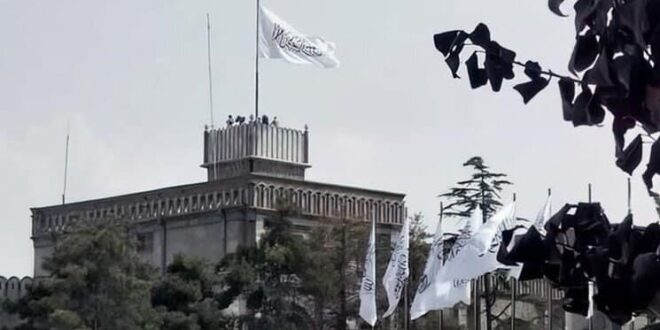
Establishing an inclusive government in Afghanistan is one of the demands of the international community, as the recognition of the Taliban as a government depends on that. The Taliban have always argued against the international community’s demands that their government system is practically inclusive and that people from all ethnic groups and regions of the country are included in the government. There are some universally accepted definitions of the type and structure of inclusive government, but in the case of Afghanistan there are different interpretations of the term and this is one of the reasons that has paved the way for the Taliban’s counter-argument.
In the international political literature, inclusive government means that all members of a society see themselves in the government which effectively serves and engages all people, including women and minorities, as it protects their rights. At the same time, even in democratic governments, not all political parties in society are always directly involved in government formation, but the political parties outside the government play a role in the politics of their countries under the guise of political opposition. Therefore, at least all people would have the opportunity to participate in politics. However, the countries and parties seeking an inclusive government in Afghanistan have not yet provided a clear picture of the type and structure of an inclusive government of their choice, and it is unclear what their perception of an inclusive government is. Some analysts argue that by demanding an inclusive government, each country seeks that politicians of their choice should be included in the government. Some believe that the demand is for the inclusion of politicians of the past 20 years in the government. Others argue that inclusive government means that power should be divided between different parties, as in the past few years.
Prior to the developments in August 2021, the international community had repeatedly insisted that it would not recognize a government formed by force in Afghanistan, and the emphasis was on the inclusiveness of the future government, with the basic assumption that the Taliban would also be included in the government alongside existing political actors; But when the Taliban took over all of Afghanistan by force, the expectations of an inclusive government were mostly dashed, and so the international community increased its emphasis on the inclusiveness of the future system, and made it a condition for the Taliban to be recognized. However, considering the current approach of the international community, the possibility has been raised that the Taliban regime will gradually be recognized as a de facto government, which has already happened to some extent. But there is still no clear picture of whether the Taliban will be recognized by the international community as a de jure government or not. This seems dependent largely on how positive the Taliban will be in response to international demands, one of which is the establishment of an inclusive government. Apparently, the Taliban are not ready to accept this demand of the international community, because on the one hand, they cannot trust politicians other than Taliban members for the survival of their government and on the other hand, they are dominated by the idea that they have defeated US and NATO and now they have the right to rule the country alone.
Ordinary Afghans also do not want government power to be divided again as a coalition government of the previous years. There is also a negative mentality towards the political actors of the last 20 years, as there are strong allegations of corruption against many officials of the last 20 years and they have been accused of looting the nation’s wealth. The general perception is that in all parts of the country there are patriotic and honest personalities other than the former politicians and they should be given a role in government at the decision-making level. But this public mindset is at a time when the demands of many countries for an inclusive government are being interpreted to mean that the political figures of the past should be included in the government. A caretaker Taliban minister has recently revealed that they have been given a list of some former politicians to be included in the government. This has affected the structure of the system in previous governments as well, and various countries have measured their good and bad relations with the Afghan government, with or without the inclusion of their pro-politicians in the government.
The Taliban’s interpretation of an inclusive government so far is that lower-level government officials will be from all segments of the society. That is why Taliban officials have always argued that the absolute majority of their government employees are the remaining employees of the previous government, as they insist that people from all ethnicities are included in the government. Therefore, at least so far, it seems unlikely that the Taliban will be ready to bring back the politicians of the past. That is why there is complete ambiguity about the nature of the future system and the role of all citizens in determining the political leadership and still no one knows what the future system of the country will look like.
If we look at the issue of inclusive government as a whole, considering the demographic structure of Afghanistan, a one-party rule in this country cannot be sustained, and on the other hand interventions by various countries due to protracted wars are led to certain parties being supported against the regime. Now it seems that the Taliban will not allow political parties other than their own members to hold high positions, and therefore, other countries do not seem to recognize their government. The Taliban are currently pursuing a policy of using force and repressing armed political opponents. At present, there is no systematic plan for reconciliation with the disgruntled Afghans who have left the country and they are not ready to give a major role to other parties and politicians in power. Therefore, there are concerns among ordinary Afghans that the current situation will continue despite the economic and political challenges and no fundamental change can be expected in the short term, leading to political and security chaos and problems.