QASED Non-government Research Organization
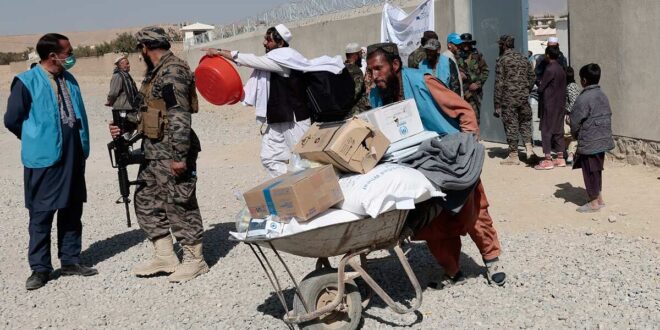
Afghans have been facing a severe economic crisis for the past few months. Economic sanctions on Afghanistan, high unemployment rate and rising commodity prices have even caused millions of Afghans to face the threat of starvation. That is why various international organizations constantly warning of a humanitarian catastrophe in the country. The main reason for this situation is the comprehensive economic sanctions on Afghanistan since the fall of the previous government and the takeover of the Taliban, as well as the suspension of international aid to Afghanistan. Afghanistan’s economy has relied on international aid for the past 20 years, and despite the arrival of tens of billions of dollars, the widespread corruption has hampered infrastructure development. That is why, with the suspension of international aid, Afghanistan has rapidly experienced a severe economic crisis.
Although the international community, and the United States in particular, seemingly talking about aid to Afghanistan and cooperation in averting the current economic and humanitarian catastrophe in Afghanistan, practically the freezing of Afghanistan’s assets is a counter-claim to preventing the current economic crisis, which is considered as the root cause for this economic crisis. The freezing of Afghanistan’s assets has dramatically depreciated the Afghani currency against the dollar and has also created challenges and problems for the Afghan banking system, as the rising value of the dollar have risen commodity prices in Afghan markets and ordinary Afghans are facing many problems and challenges. The international community, and the United States in particular, is trying to put pressure on the Taliban, while various findings by international think tanks shows that the international community’s actions have not had any effect on the Taliban’s decisions and behavior, but have harmed ordinary Afghans. In its recent report, the International Crisis Group (ICG) has called on the United States to release Afghanistan’s frozen assets.
Various countries and international organizations have repeatedly warned of a humanitarian catastrophe in Afghanistan over the past few months, but their approach to preventing this catastrophe is indistinct. So far, some aid has reached Afghanistan and been distributed to the general public, but there are widespread questions about the effectiveness of this aid, as there is no clear mechanism for that.
In its latest move, the Islamic Emirate of Afghanistan convened an international conference on “Afghanistan’s Economy”, calling on the international community to recognize Afghanistan’s new government and release Afghanistan’s frozen assets. The Prime Minister of the Islamic Emirate of Afghanistan called the freezing of these assets the main reason for the ongoing economic crisis. Deborah Lyons, the United Nations’ political envoy to Afghanistan, told the conference that humanitarian aid is not a fundamental way to rebuild Afghanistan’s economy, rather the frozen assets of Afghanistan should be released as a first step, and the country’s economy must be revived.
The positions of many international organizations and a number of countries, including the United Nations, show that Afghanistan’s economy is currently a victim of global politics and that if this situation continues, it will only worsen the country’s economic situation without any effects in the political arena.
To that end, Afghans today are urging the international community, particularly the United States, not to punish the entire Afghan nation for its problems with the Taliban government, but to deal with it as a matter of fact, and lift economic sanctions on Afghanistan. At present, the international community cannot offer any alternative to the Islamic Emirate, but only pressures the Islamic Emirate to change its policies and behavior, which has not been affected by the economic sanctions. At the same time, the Islamic Emirate of Afghanistan needs to find a way to reach an understanding with the international community and soften its stance. There is now a need to respond to a number of positive international demands, which are also the demands of Afghans internally, to prevent the country’s economic system from collapsing completely.
The end