QASED Non-government Research Organization
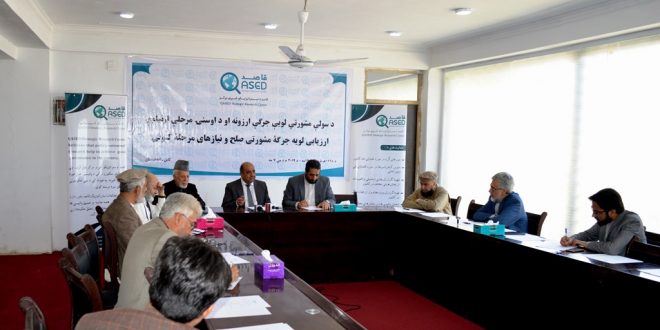
Evaluation of Peace Consultative Loya Jirga and current phase requirements
(Academic discussion of peace activists and observers)
Declaration
Activists of peace process and observers, political figures, university professors and scholars evaluated the latest Consultative Loya Jirga and its outcomes in an academic discussion. During the discussion, initiatives and steps that are currently required for the success of the peace process in the country were also discussed. Participants of this analytical discussion emphasized the following points concerning the outcomes and impacts of the Peace Consultative Loya Jirga, as well as the success of the peace process and the removal of existing obstacles to peace in the country:
- Currently, a golden opportunity for peace in Afghanistan has been facilitated more than any other time; therefore, creating obstacles to the peace talks and disrupting this opportunity from any side is contradiction to peace in the country where the future generations will consider this as a betrayal against the national and Islamic interests.
- The call for a ceasefire from the Consultative Loya Jirga is the Afghan people demand and both sides of the war should respond positively to this demand in order to stop the ongoing bleeding of Afghans and to facilitate a way to build trust between the two sides.
- Since the start of peace negotiations between the US and Taliban, the Afghan and foreign forces joint night operations have also increased in which as consequence, civilian casualties are increasing. That’s why we call on the Afghan government to stop the bombardment and night search operations on the houses and villages of the civilians. The participants of the discussion condemned not including it in the declaration of the Jirga although that the Loya Jirga participants had called to stop these bombardments and search operations.
- The call from the Peace Consultative Loya Jirga of withdrawal of foreign troops from Afghanistan is worth praising; because appropriate and acceptable schedule determining for withdrawal of the foreign forces is an essential step in the current stage. We call on the Afghan government to try to facilitate the opportunity of the foreign forces’ withdrawal instead of putting efforts for having them stay. Also, we emphasize that foreign forces shall not destroy their weapons and equipment and not take it out from Afghanistan, but indeed submit it to Afghans after their withdrawal.
- Readership of various verses of the religion since its the main cause of the war and it can complicate the situation. Currently, the fundamental factor of the war is the presence of foreign troops in the country and by relating this war to Islam and Muslim-hood while calling foreigners irresponsible makes this situation more complicated. However, this point was not a focus point of the Loya Jirga and all committees’ general discussion; but unfortunately, it included in the last declaration.
- Stress on the name and type of the governing system in the country shouldn’t facilitate a way for conflict. As all sides agree that an Islamic and democratic system will govern the country therefore, in this phase such issues determined as preconditions can create obstacles to peace in the country.
- A suitable ground should be facilitated through any possible channel for direct talks between Taliban and other Afghan figures in order to build trust between the two sides, negative comments and inappropriate statements should stop.
- There is serious need for meetings such as the one was planned in Qatar for the success of the Inter-Afghans understanding, to discuss the controversial issues and develop a preliminary list of controversial points at presence of both sides for more technical discussions to take place.
- It is better to have 20% Afghan government representatives, 20% Taliban representatives and 60% representatives from the Afghan politicians, scholars, peace activists and other Afghan sides in Inter-Afghan meetings. But the differences related to the participants of the meetings and lack of coordination can lead to failure of this process; so we name it “creating barriers to peace” hence, shouldn’t be taken forward.
- Stressing on the peace negotiation under the governmental ownership is causing of creation a peace obstacle; that’s why the government should compromise its position and instead open the way for Inter-Afghan negotiations.
- Establishment of an interim administration if could help to stop the bloody war, so if needed, the opposition to such administration shouldn’t be the cause of the continuation of the war in the country.
- The demand for no threat from Afghanistan’s soil to others shouldn’t bring Afghans to the direction that can be used to serve colonial demands of other countries.
- Concern about internal warfare is the main concern of all Afghans and should be properly taken into consideration in all meetings of the negotiations in order to ensure that Afghans that will not repeat again the tragedy of internal conflict.
- A major problem in Afghanistan is the lack of a strong government. The international community should support a strong and centralized administration system. Since with long-term support of Afghanistan, the government will play its role in preventing internal conflict in the post-peace phase.
The end