QASED Non-government Research Organization
By: Abdulbari Kabiri
Direct talks between the Afghan Government and the Taliban have started recently and, even before the start of the official peace negotiations, the process has proven to be a complicated one. We witnessed fierce disagreements when both sides tried to define the conflict, events in the history and a legal mechanism for the progress of the peace talks. However, achieving such understanding in a pre-negotiation phase seems difficult, and debates surrounding it could delay further the debates over the core issues.
As the peace negotiations move forward, there is need for consensus of various actors to smooth the process. Local actors like the government, the Taliban, paramilitaries, political parties and civil society need to be satisfied with the outcome. On the other hand, regional and global actors such as the United States and her allies, the regional and neighbouring countries must also be in agreement with the end result. However, the main parties on the battlefield, who can continue the war, are now narrowed to only two sides, the government and the Taliban. This brings hope to Afghans that the peace process could be less complicated if both parties kept their interests embedded in those of the nation. In the long run, an end to the Afghan war, and peace and stability in the region is in the interest of neighbouring countries, the region and the world at large, and will provide Afghans with a prosperous life.
All sides, including the Afghan government and the Taliban, are tired of the ongoing war and want a peaceful solution to the ongoing conflict. Therefore, there are widespread hopes that the current intra-Afghan talks in Doha of Qatar will continue and reach a desirable conclusion. However, this can be a complicated task to achieve, given the battlefield is still hot and attacks on each other continue. Here I would like to shed light on the four main elements influencing the success of peace talks:
Mutual Trust among the Parties: building of trust is an important element in peace negotiations and conflict resolutions, particularly in civil wars. Building trust is a difficult task in such a situation and circumstances, where the violence has destroyed social norms and national cohesion and there is no atmosphere of trust between the parties involved. Given the current situation in Afghanistan, it is clear that there is a huge mistrust among the two warring parties and also amongst the other groups involved. The root causes of this go back to the war in which many armed groups fought each other at various fronts and often exchanged their stances over a period of time. Some non-state actors feel that they are excluded from the peace talks, and it means their marginalisation in the future political arrangements in the country. Although a lage number of prisoners were released as a goodwill by both sides, the ceasefire requested by the government was refused by the Taliban on the basis that the war will only stop when there is an agreement on the issues counted as root causes of the war.
Realistic Expectations: As the peace talks progress, expectations of each party will be better known. However, both parties are warned that they must be realistic in their expectations to assist ending the war. Currently seems that neither the Taliban nor the government will accept defeat in peace talks as some may expect. The Afghan government though with limited territorial control and some fundamental internal failures, is functioning well with huge support from the international community. Therefore, it seems that the Afghan government may not compromise on its core values, institutions and liberties without fierce confrontation against the Taliban. On the other side, the Taliban who control more than half of the country, in some cases as a shadow force, will not be pushed back by force, particularly as this has not happened with the presence of a large number of foreign forces.
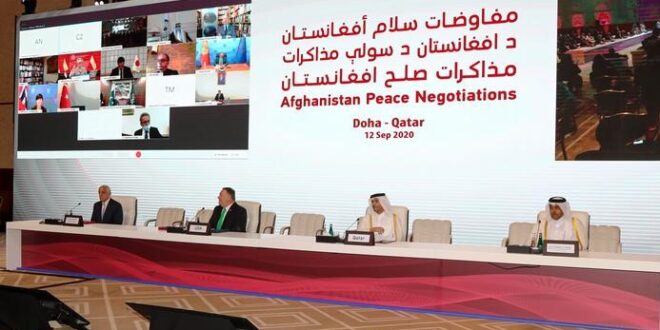
International Support: Internationally, there is a massive diplomatic support for the intra-Afghan peace talks. The inaugural meeting of the intra-Afghan peace negotiations was held in the presence of a big diplomatic gathering and it is now widely believed that peace in Afghanistan will serve the interest of regional and international actors. The war in Afghanistan continued for over four decades with direct or indirect foreign intervention; as a result of which Afghans suffered and the country was diverted from its development path initiated before the war. The region’s development was also slowed down due to the instability in the region and there are more security threats in the region than there were forty years ago. Whilst Afghans should be optimistic about the current international support, the continuation of talks and how Afghans are proceeding with the talks will determine whether the regional countries and the international community are willing to support ending the war.
Role of Mediators: The role of mediators in the Afghan peace process is important than ever before. Mediators can intervene when the talks stall and can also speed up the process. Afghans are tired of the war which has continued for too long. Continuation of war will add more misery to the already weakened nation, more Afghans will be killed and more will be made homeless. Mediators also can help in technical support such as proposing practical steps and alternative solutions to narrow gaps between the two parties. The State of Qatar as the host country for the peace talks is also hosting many state representatives and Non-Governmental Organisations to be present and support the process. However, it was agreed beforehand that the intra-Afghan talks would be Afghan-owned and Afghan-led process which limit the role of foreign state mediators and Non-Governmental Organisations, yet there is an opportunity for Afghan intellectuals and institutions to play their part.